

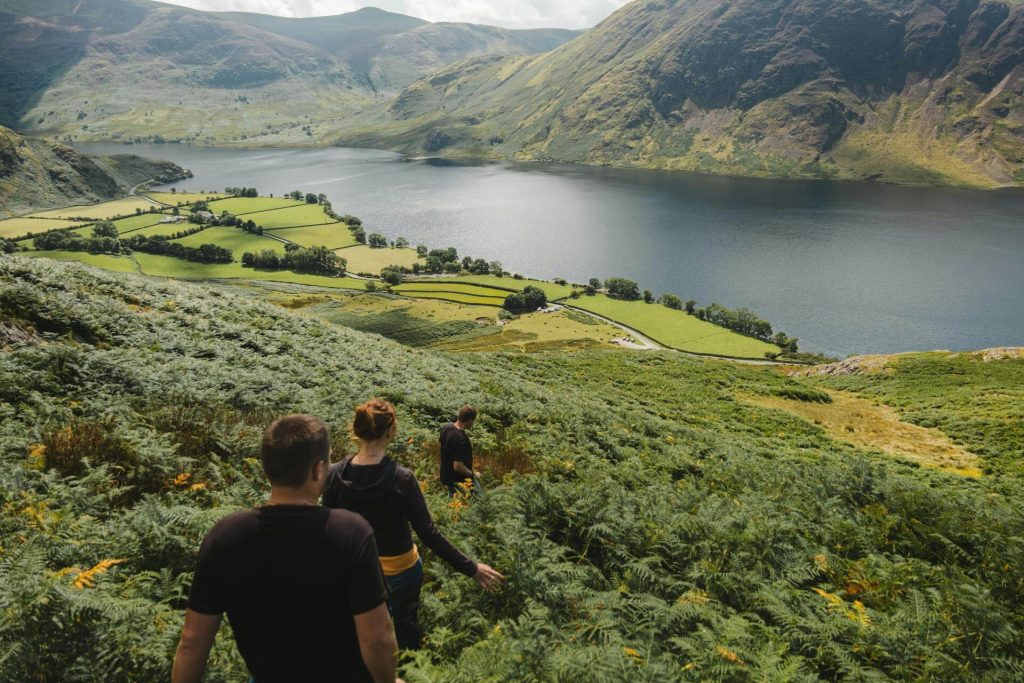
Fell walking forms a central part of outdoor activity across the Lake District.
This guide explains the nature of fell walking, its origins and some of the best-known routes.
So, What is Fell Walking?
Fell walking means hiking across the fells of the Lake District on foot. It combines exercise with exploration of rugged terrain and wide views.
Routes range from short outings on lower slopes to full-day expeditions over multiple summits. Paths vary from clear tracks to rough, stony ground.
Good boots, waterproof clothing and a map or GPS device are standard equipment. Conditions can change quickly with altitude and weather.
Related: Best Winter Lake District Walks

Why is a Fell Called a Fell in The Lake District
The term fell comes from the Old Norse word fjall, which means mountain or hill. Viking settlers brought this word to Cumbria many centuries ago.
In the Lake District, fells refer to the open, often grassy or rocky uplands that rise above the valleys and lakes. The name highlights these wild, open spaces shaped by ice ages and human activity.
Related: What is a Lake District Fell?
5 Famous Fell Walks in Cumbria
Gummer’s How Circular
This moderate route offers an accessible introduction to fell walking with excellent views over Windermere.
The path climbs through rough ground to the summit.
Panoramic sights extend across the lake and surrounding fells.
Careful footing is needed on the final approach, especially after rain.
- Length: 1.5 miles (2.4 km)
- Estimated time: 0.5 to 1 hour
- Level: Moderate
Related: Best Ulverston Walks
Langdale Pikes Circular Route
This strenuous circuit takes in several prominent summits, including Pike of Stickle, Harrison Stickle and Pavey Ark.
The route features steep climbs and loose rock sections.
Dramatic views open across Great Langdale and the central fells throughout the walk.
- Length: 6.9 miles (11.1 km)
- Estimated time: 5 to 7 hours
- Level: Strenuous
Skiddaw and Applethwaite Circular
This hard walk climbs to the summit of Skiddaw, one of the highest peaks in England outside the Scafell range.
The ascent follows a steady but demanding path with significant elevation gain.
Wide vistas stretch across the northern Lake District and beyond on clear days.
- Length: 8.4 miles (13.5 km)
- Estimated time: 6 to 6.5 hours
- Level: Hard
Helvellyn Circular via Striding Edge
This strenuous route includes one of the most famous ridges in the Lake District.
The path crosses the narrow, exposed Striding Edge before reaching the broad summit of Helvellyn.
Scrambling sections and steep drops require concentration and a steady head for heights.
- Length: 10.2 miles (16.4 km)
- Estimated time: 6 to 8 hours
- Level: Strenuous
Scafell Pike from Seathwaite Circular
This strenuous ascent reaches the highest point in England via the Corridor Route from Borrowdale.
The trail passes through boulder fields and involves a tricky scramble known as the Bad Step.
Panoramic views from the top extend across much of the Lake District on favourable days.
- Length: 9.5 miles (15.3 km)
- Estimated time: 6 to 8 hours
- Level: Strenuous
Who Was Alfred Wainwright and What Was His Influence on Fell Walkers?
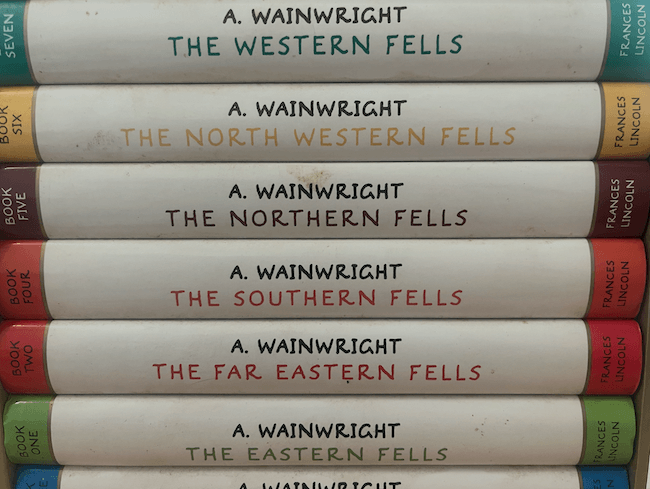
Alfred Wainwright created seven hand-illustrated books known as the Pictorial Guides to the Lakeland Fells between 1955 and 1966.
Born in Lancashire in 1907, he later settled in Kendal.
His guides contain detailed drawings, contour maps and personal descriptions of every route and summit. They cover 214 fells in total.
His work popularised the systematic exploration of the Lake District fells.
Many walkers still use his books as essential references today.
Where to Stay On Your Trip to The Lake District
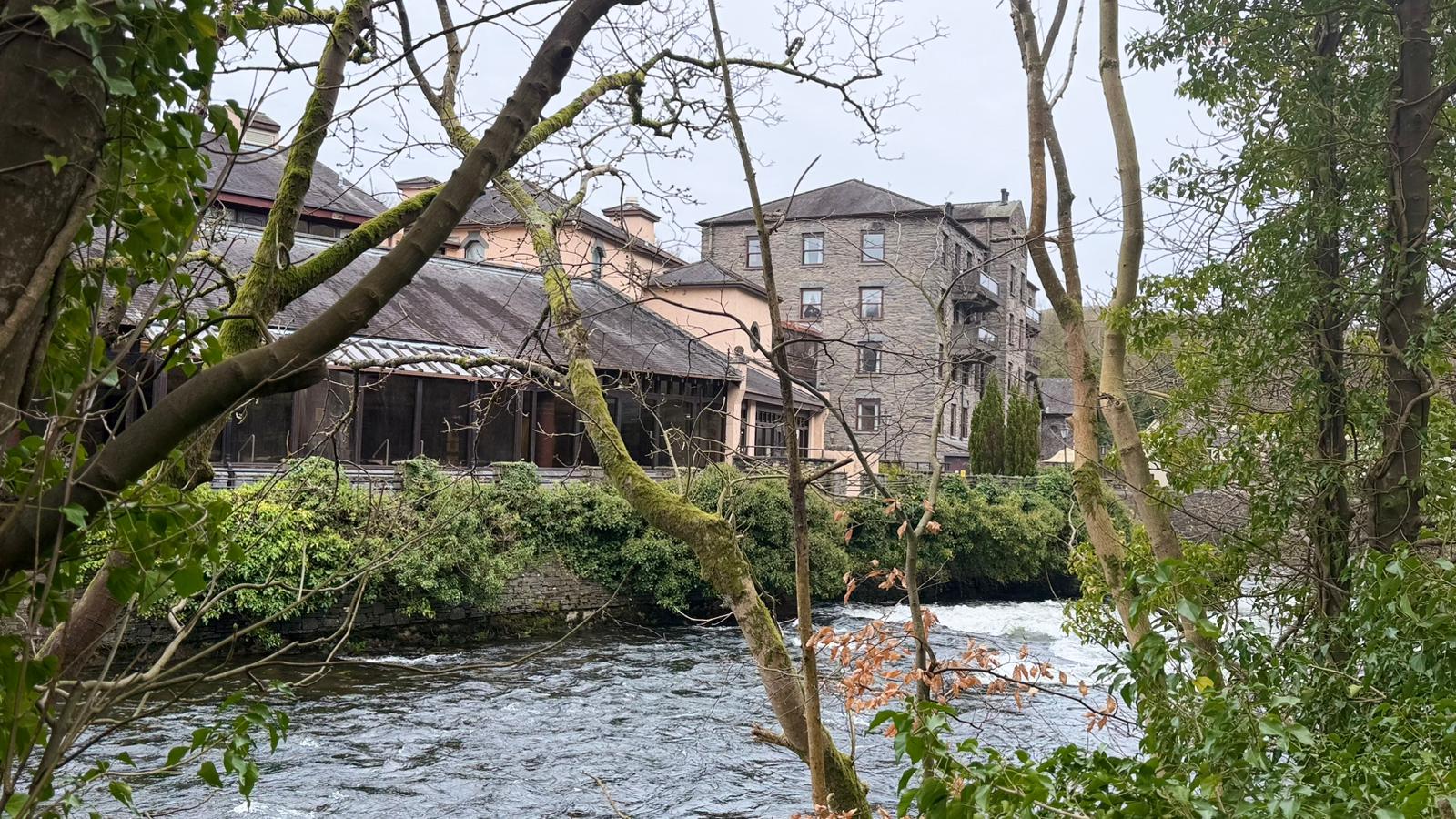
The White Water Hotel offers an ideal base for fell walking expeditions in the Lake District. It occupies a historic former mill building beside the River Leven near Newby Bridge.
The hotel combines traditional charm with modern comforts, including a spa and excellent dining. Guests enjoy convenient access to southern Lake District routes.
What is the History of Walking in The Lake District Fells?
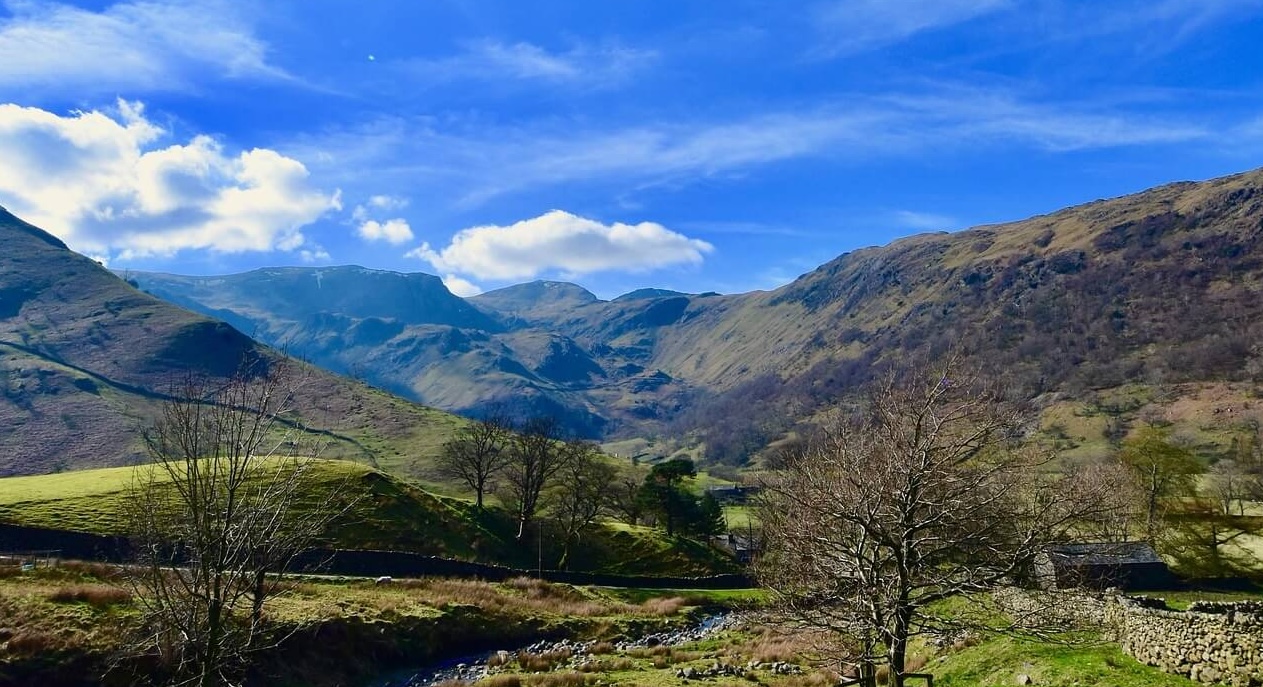
Fell walking has deep roots in the Lake District. For centuries, local people walked the fells as part of daily life.
Shepherds regularly crossed the high ground while tending their flocks of sheep.
The distinctive term for these uplands was introduced by Viking settlers over a thousand years ago.
Their word for “hill” or “mountain” became embedded in the local landscape and language.
In the late 18th and 19th centuries, the Romantic movement brought fresh interest.
Writers such as William Wordsworth highlighted the dramatic beauty of the fells, attracting artists and early visitors who explored the mountains on foot.
Recreational fell walking gained popularity in the early 20th century.
Better roads and railways allowed more people from nearby cities to reach the Lake District.
The designation of the Lake District as a National Park in 1951 helped protect the area and promoted thoughtful access to the fells.
This long tradition continues to shape fell walking today.
Final Notes On Fell Walking
Fell walking allows visitors to experience the Lake District at a slower, more immersive pace. Each route brings different challenges and rewards.
Proper planning and suitable equipment support safe and enjoyable days on the fells. Checking weather forecasts remains essential.
The fells provide options for every level of walker and encourage regular returns as skills develop.
