

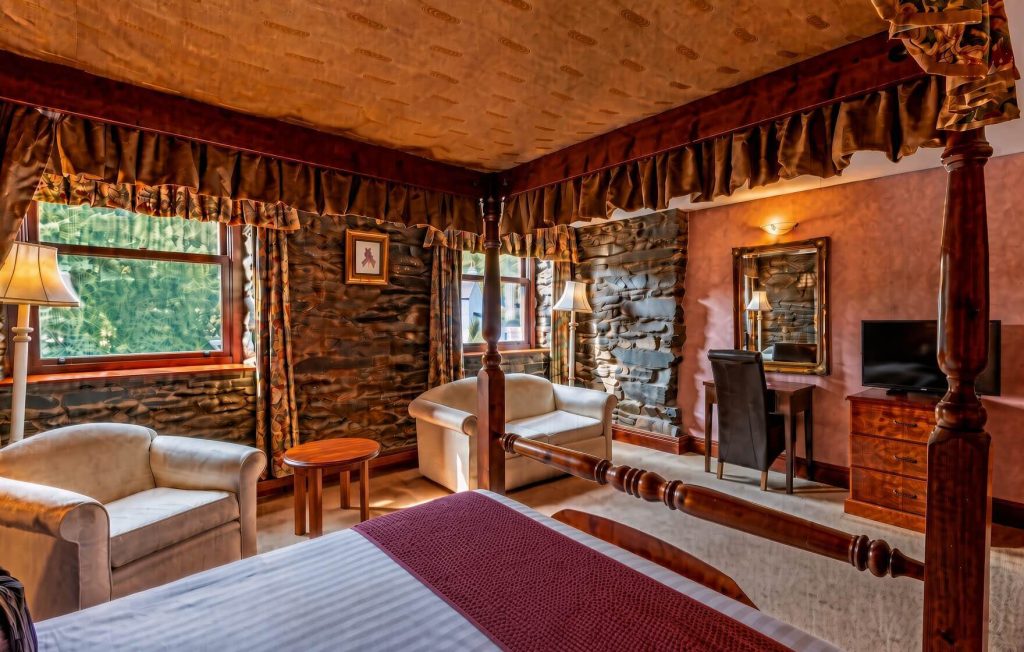
Looking for a four-poster bed hotel room in the Lake District that feels private, a little grand and close to the water?
This article sets out what you will find if you stay in one of the four-poster rooms at The Whitewater Hotel in Backbarrow.
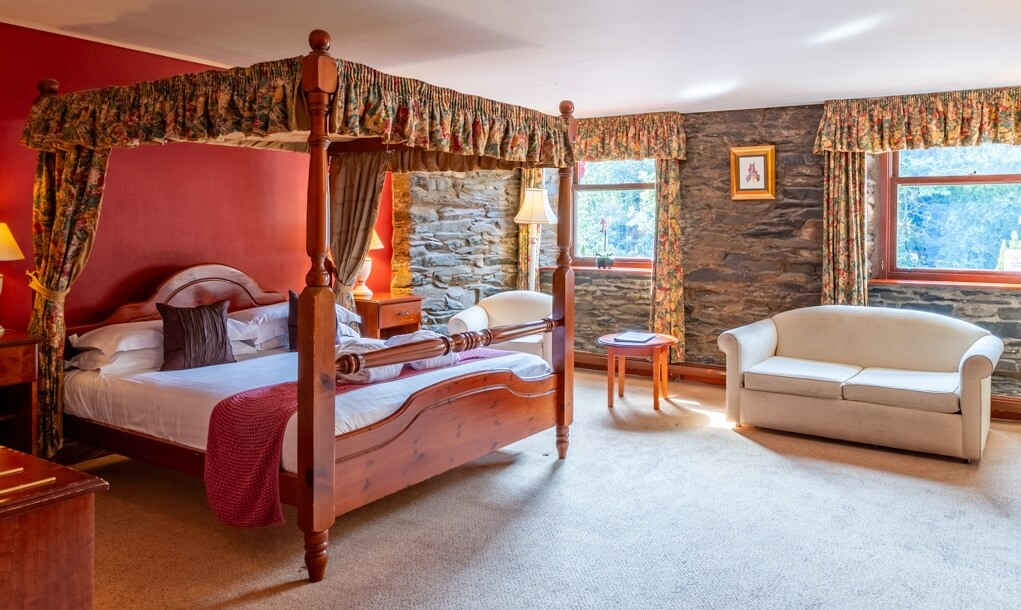
Four-Post Beds at The Whitewater Hotel
The Whitewater Hotel lies right on the River Leven in Lakeland Village, Backbarrow, near Newby Bridge.
It is about one mile south of Lake Windermere and close to the popular town of Ulverston.
The building started as a mill and later housed the Dolly Blue pigment works.
It has operated as a hotel since the 1980s and now has 38 ensuite rooms.
Three of those rooms have four-poster beds. All three look out over the river.
You can expect an en-suite bathroom with bath and shower, tea and coffee facilities, a television, free Wi-Fi and the usual hotel extras.
Many guests also enjoy using the Cascades Leisure Club and Spa during their stay, including the indoor pool, gym and thermal facilities.
Four-poster rooms are limited, so please request one when you book.
Reception can tell you which of the three is free on your dates and confirm the view and bathroom layout.
Book Your Four-Poster Stay at the Whiteway Hotel Here…
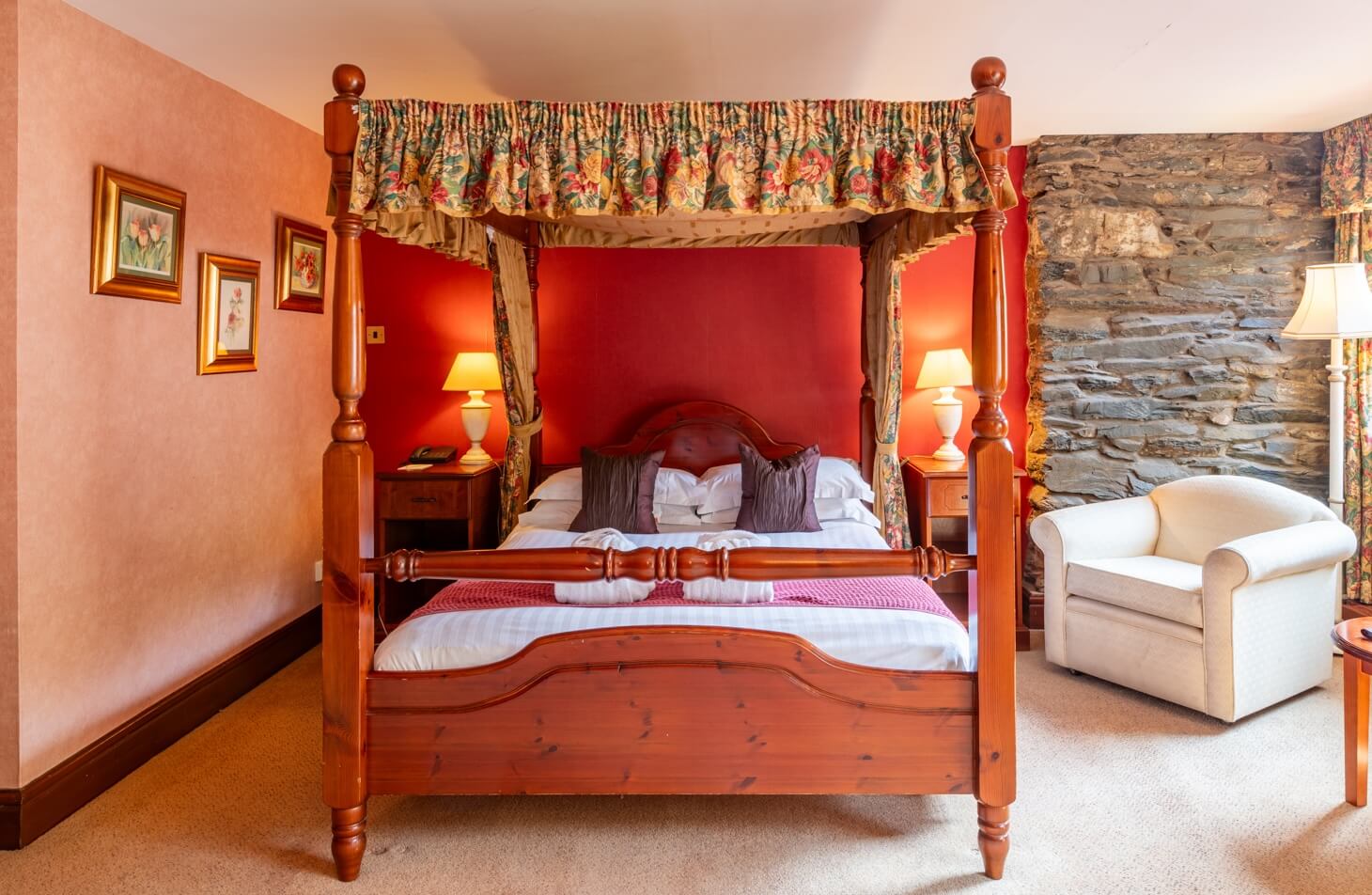
The History of Four-Poster Beds
A four-poster bed has a post at each corner, often joined at the top by a frame known as a tester.
Curtains or a canopy can hang from that frame.
The idea is older than English country-house bedrooms.
Early canopied beds in other cultures kept insects off the sleeper and marked out a private space inside a shared room.
In England the tall, standing four-poster became common from the fifteenth century. Drafty halls and shared bedchambers made curtains useful.
They held in heat, blocked some light and gave the sleeper a little privacy when servants or attendants slept nearby.
Wealth showed in the woodwork and the fabrics. Oak posts could be heavily carved. Hangings might use expensive cloth, embroidery or heraldic decoration.
The bed was often the most valuable piece of furniture in the house, and a good one could pass down in a will.
Tudor and Elizabethan beds could be large and ornate.
The best-known English example is the Great Bed of Ware, made around 1590 for an inn in Hertfordshire and now in the Victoria and Albert Museum.
It is far bigger than a normal bed and was famous enough that Shakespeare mentioned it in Twelfth Night.
Later centuries changed the look more than the basic idea.
Seventeenth- and eighteenth-century state beds often hid most of the wood behind rich drapes.
Georgian and Victorian makers favoured slimmer posts and lighter canopies.
By the time central heating arrived, the curtains were no longer a necessity.
The four-poster stayed because it still makes a bedroom feel finished and separate from the rest of the house.
A modern hotel four-poster is usually simpler than a Tudor original. You still get the four posts and a sense of enclosure.
You rarely get a full set of heavy historic hangings, and that is no loss if you prefer a brighter room and a view of the river in the morning.
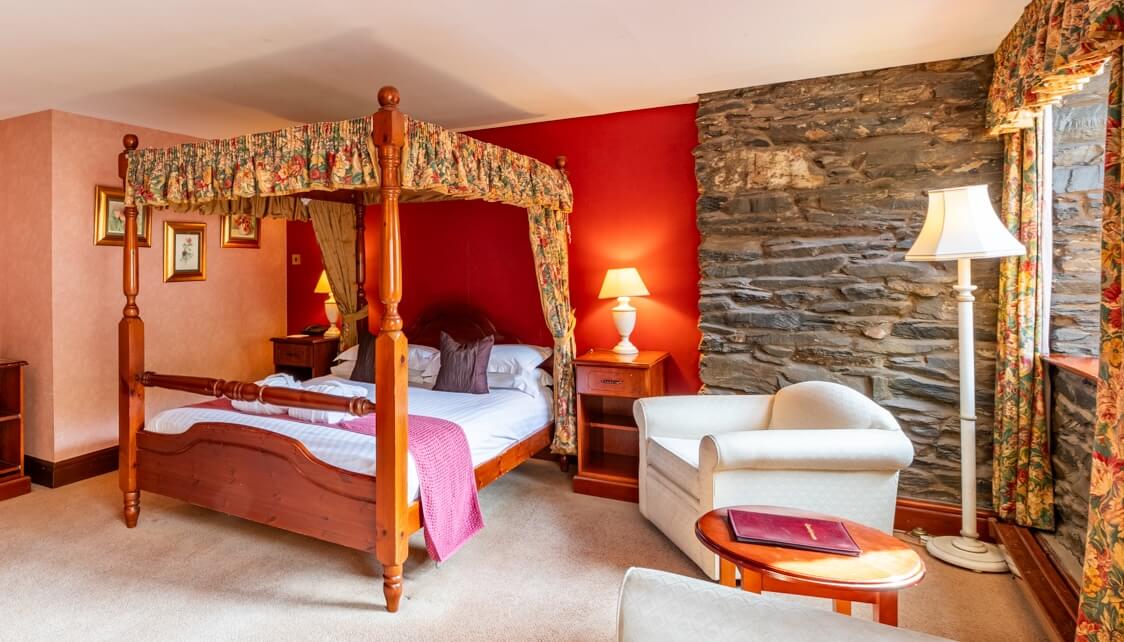
Why Are They So Romantic?
Romance here is less about decoration and more about how the bed changes the room.
A four-poster creates a room inside a room. Draw the drapes, if the bed has them, and the rest of the hotel falls away.
Leave them open, and the posts still frame you. That outline reads as special even when the rest of the furniture is straightforward.
Privacy is part of the appeal. Historic beds used curtains because people shared chambers.
Today you are not sharing with a household staff, yet the same shape still suggests a night set apart from ordinary sleep.
That is why four-poster rooms are often chosen for weddings, anniversaries and first nights away together.
Scale matters too. Tall posts draw the eye up.
The bed becomes the main object in the room, rather than a mattress against a wall.
In a riverside hotel, that contrast works well: water and trees outside, a defined, quieter space inside.
Comfort plays a part. Many people sleep better when the bed feels slightly enclosed.
Curtains can cut early light. Even without curtains, the posts give a sense of shelter that a standard headboard does not.
None of this needs heavy language or fairy-tale claims.
You are booking a larger, more distinctive bed in a room with a river view.
If that matches what you want from a Lake District four-poster bedroom, ask for one of the three rooms when you reserve, and check the dates on the stay page before they go.
