

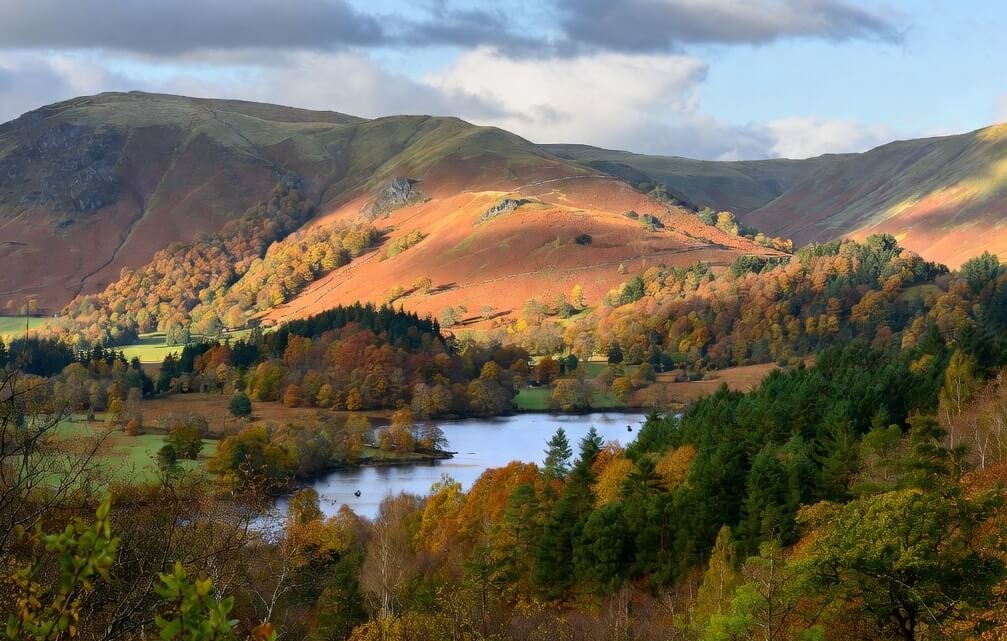
The Lake District National Park changes each autumn dramatically as broadleaf woodlands take on vibrant tones of gold, russet and copper.
You can enjoy quieter paths, cooler air and striking contrasts between coloured trees, open fells and reflective waters.
This guide explains timing, outlines five circular routes in the southern section of the park, provides practical route details, and covers typical autumn conditions so you can plan effectively.
Related: Autumn Colours in The Lake District
Lake District Autumn Colours
Broadleaf trees such as oak, beech, birch and rowan dominate many lower valleys and slopes across the national park.
In the southern Lake District, around Windermere, Coniston and the Leven Valley, these species produce reliable displays once nights cool and daylight shortens.
Higher elevations show earlier shifts, while sheltered lakeside areas hold colour longer.
The combination of mixed woodland, open pasture and dramatic backdrops creates a strong visual impact.
Paths are accessible but much less crowded than in summer, and the crisp air adds to the freshness.

When is the Best Time For Autumnal Colours?
The most consistent period runs from mid-October to early November.
The colours often build from late September in exposed areas and reach full intensity during the last week of October and the first half of November, depending on temperature drops and rainfall patterns.
Mid-October usually brings the strongest variety of hues, with oaks and beeches turning later into early November.
Checking recent photographs from local sources or visiting during the second half of October maximises chances of peak conditions.
Weekday visits avoid any residual weekend pressure.
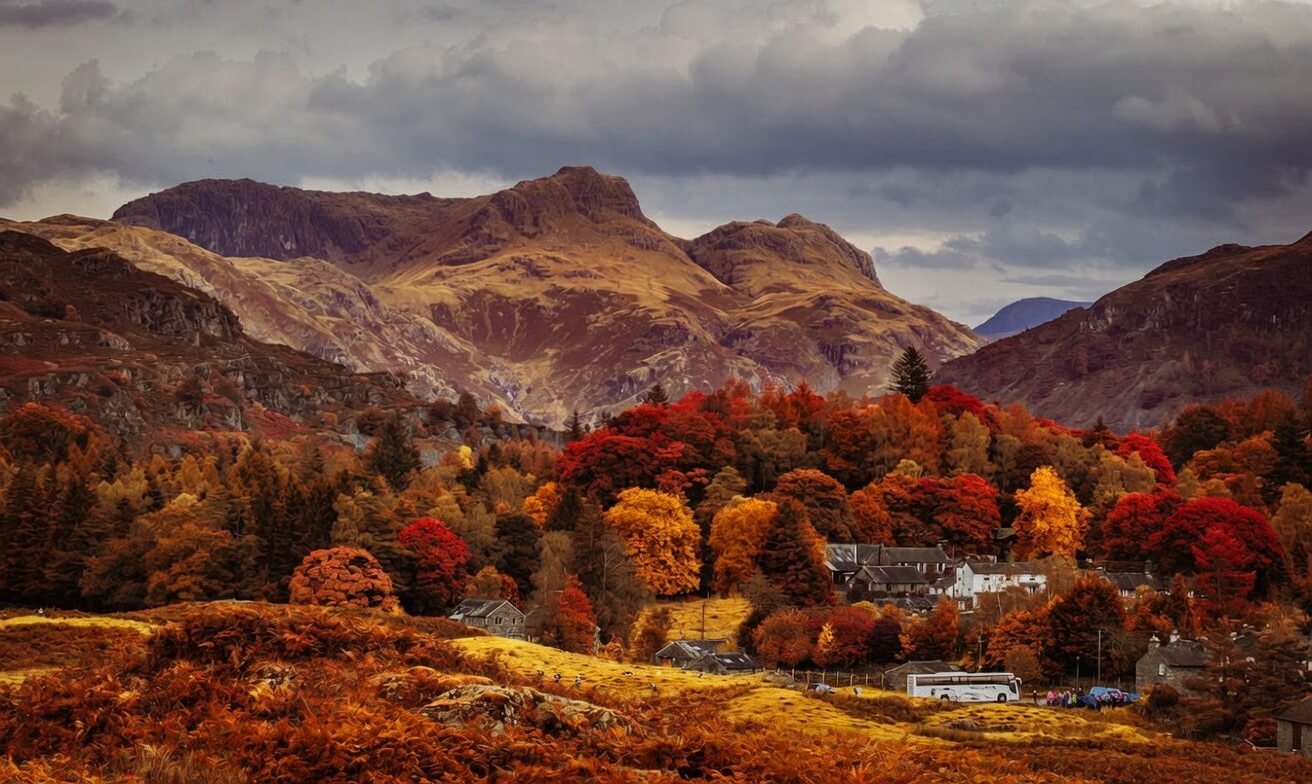
Great Walks to Enjoy the Autumn Views
The following circular routes are within easy reach of one another in the southern Lake District.
Each offers good tree cover or elevated viewpoints ideal for observing autumn foliage.
Route statistics appear in the bullet points below. All the routes suit reasonably fit walkers with proper footwear.
Newby Bridge and High Dam Circular
This route climbs steadily from the Newby Bridge area through mixed woodland before reaching the tranquil High Dam reservoir.
Walkers pass sections of Great Knott Wood where beech and oak create dense canopies that glow in autumn light.
The path then opens to views across the valley with the reservoir reflecting the surrounding colours.
The return leg drops gently past fields and lanes, completing a satisfying loop with changing scenery along the way.
- Distance: 8.5 km (5.3 miles)
- Estimated time: 3 to 3.5 hours
- Difficulty: Moderate
- Elevation gain: 363 metres
- Route type: Circular
- Key features: Woodland paths, reservoir views, lakeside finish, good birdlife
- Practical notes: Park at designated areas near Newby Bridge or Finsthwaite. Sturdy boots are recommended after rain. Ideal length for a full morning or afternoon with stops to enjoy the foliage.
Haverthwaite Circular
A gentle loop in the Leven Valley that follows riverside sections and passes through pockets of woodland and open countryside.
The path stays close to the River Leven in places, where overhanging trees line the banks and cast strong reflections in the calmer water.
Former industrial sites, add interest, while the low-level terrain allows steady progress and plenty of time to observe seasonal changes at eye level.
- Distance: 5.6 km (3.5 miles)
- Estimated time: 1 to 1.5 hours
- Difficulty: Easy
- Elevation gain: Approximately 85 metres
- Route type: Circular
- Key features: Riverside paths, woodland edges, heritage interest
- Practical notes: Suitable for most fitness levels. Paths can become muddy; boots are advised. Short enough to combine with another activity on the same day.
Bishop’s Allotment
This peaceful route explores a nature reserve area beside the River Leven with open meadows and pockets of mature trees.
The trail offers a relaxed pace with opportunities to see cattle-grazed fields bordered by colourful hedgerows and woodland.
Elevated sections provide wider views across the valley where autumn tones stand out against the green fells beyond.
- Distance: 6.1 km (3.8 miles)
- Estimated time: 1.5 to 2 hours
- Difficulty: Easy
- Elevation gain: 193 metres
- Route type: Circular
- Key features: Nature reserve, river proximity, meadow and woodland mix
- Practical notes: Watch for livestock in fields. Good option for shorter days or when combining walks. Clear paths, but take care in any damp sections.
Tarn Hows Circular
Tarn Hows delivers one of the most photographed landscapes in the Lake District.
The circular path circles the tarn while passing through conifer and broadleaf plantations that display rich autumn contrast.
Distant fells form a dramatic backdrop, and the level sections allow unhurried appreciation of reflections and surrounding colour.
Optional short extensions add variety without excessive effort.
- Distance: Approximately 7.4 km (4.6 miles)
- Estimated time: 2.5 to 3 hours
- Difficulty: Moderate
- Elevation gain: Around 357 metres
- Route type: Circular
- Key features: Tarn views, mixed plantations, fell panoramas, well-maintained paths
- Practical notes: National Trust parking available. Very popular; early starts recommended. Paths suit a wide range of walkers and remain firm for most of the year.
Gummer’s How Extended Circular
This longer loop starts with a steady ascent to Gummer’s How summit for expansive views over Windermere and the surrounding fells.
The route then continues through plantations and open ground, linking several minor summits and offering repeated changes in perspective on the autumn landscape.
The elevated sections maximise exposure to coloured slopes across a wide area.
- Distance: 10.6 km (6.6 miles)
- Estimated time: 3.5 to 4 hours
- Difficulty: Moderate
- Elevation gain: Approximately 392 metres
- Route type: Extended circular
- Key features: Summit panoramas, plantation sections, Windermere vistas
- Practical notes: Strong footwear and waterproof layers are advised. Suitable for walkers seeking greater challenge and reward. Start early to enjoy full daylight.
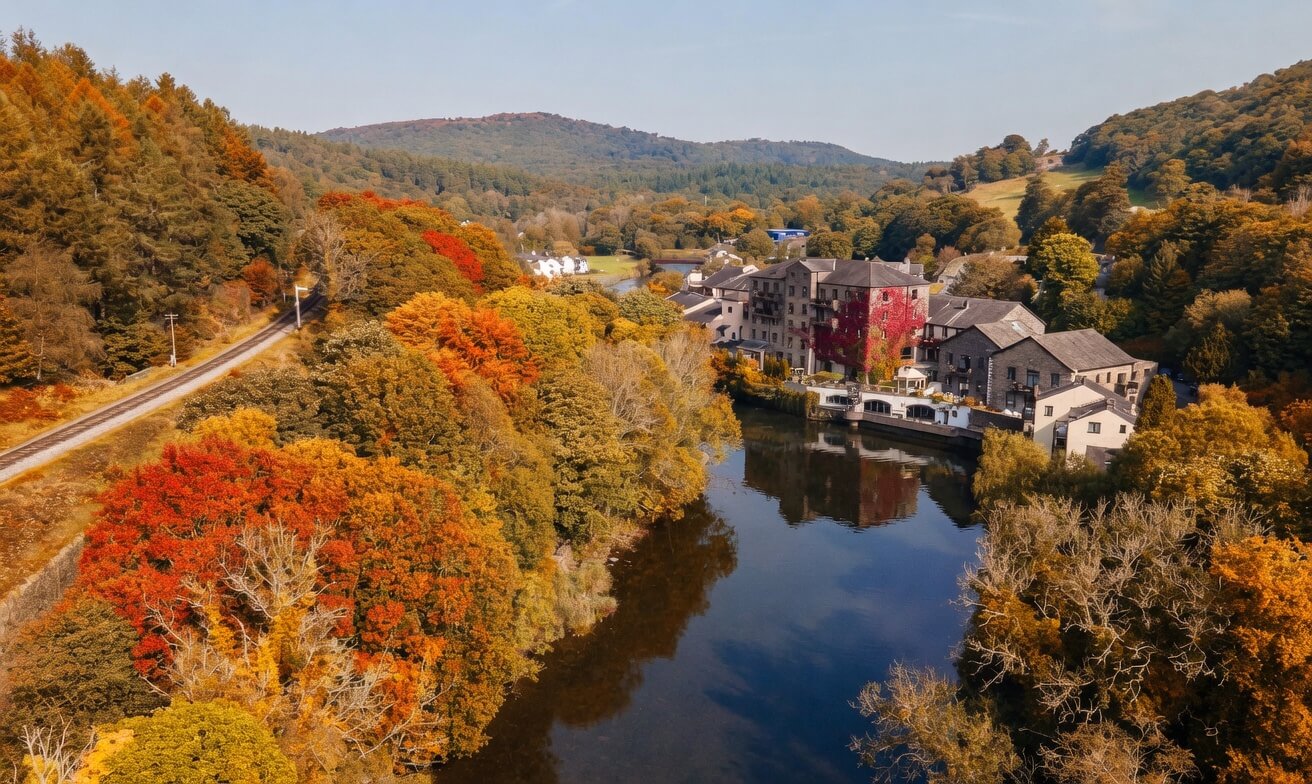
Where to Stay On Your Trip to The Lake District
The Whitewater Hotel provides a convenient base close to the southern Lake District routes described above.
You will benefit from comfortable rooms, on-site facilities and direct access to the local area.
Book accommodation directly through the hotel website to secure the best rates and availability for autumn dates.
Book your stay at the Whitewater Hotel
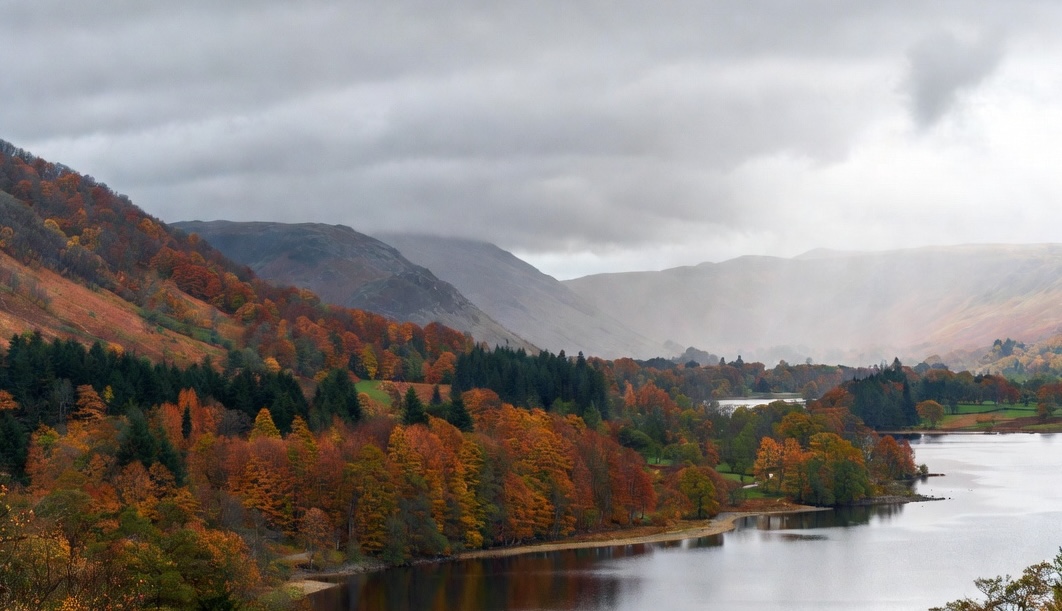
What’s Autumn Weather Like in The Lake District?
Expect daytime temperatures between 8 °C and 13 °C during October and November, with nighttime lows often falling to 4 °C or below.
Rainfall increases compared with summer, averaging 150-200 mm per month, so showers remain common.
Crisp, bright days alternate with overcast or misty conditions that can enhance the atmosphere around water and woodland.
Wind increases at higher elevations. Pack layered clothing, a reliable waterproof jacket, sturdy boots and a hat and gloves for early mornings and evenings.
Check forecasts daily and carry spare layers, as conditions can change quickly. Shorter daylight hours mean planning walks to finish well before dusk.
Final Notes On Lake District Autumn Colours
These circular walks give walkers a practical and varied selection of routes to experience the autumn colours across the southern Lake District.
The options range from gentle low-level paths to more demanding circuits with elevated views, allowing visitors to match the walk to their fitness, available time and preferred pace.
Preparation plays a key role in a successful day out. Strong walking boots, layered clothing, and reliable waterproofs help manage changeable ground and weather conditions.
Shorter daylight hours in late October and November make an early start advisable to finish comfortably before dusk.
Offline maps or a navigation device prove valuable where mobile signal is limited, and daily weather checks allow better route choices.
Responsible walking supports the area for all visitors and the local community.
Stick to marked paths, close gates after use and carry out every item of litter. Keep dogs under close control near livestock and respect working farmland.
These steps maintain access and protect the landscape that makes the season so special.
